Firewall & IoT Edge Device
Retrofitting of Systems and Machines
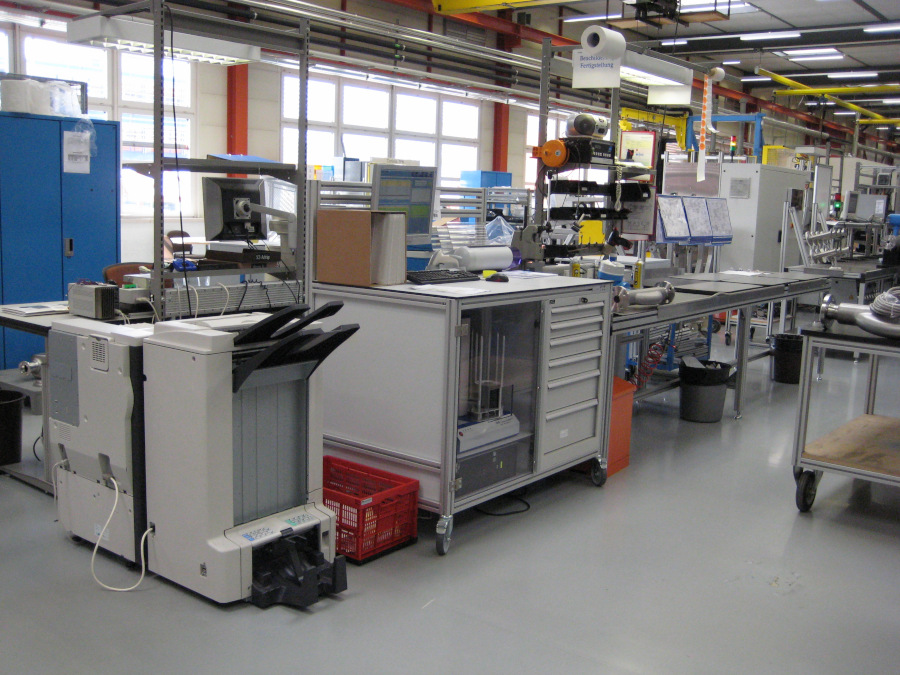
The machine parks of manufacturing companies have grown historically and have been continuously expanded in many cases. Systems that are several decades old (known as brownfields) operate side by side with state-of-the-art systems (also known as greenfields). In many cases, replacing them with new machines does not make economic sense. A retrofit strategy can help to integrate production systems into modern IT structures.
IT Security in the context of Retrofitting
Connecting systems to the internet was more than 20 years ago hardly an issue. Accordingly, brownfields are not designed to exchange data via the internet. Operational technology, which describes the IT infrastructure within production environments, was also not considered to be a separate issue for a long time.
Today, it is clear that digitalisation can lead to efficiency gains and other advantages within a company as well as across company boundaries and along value chains.
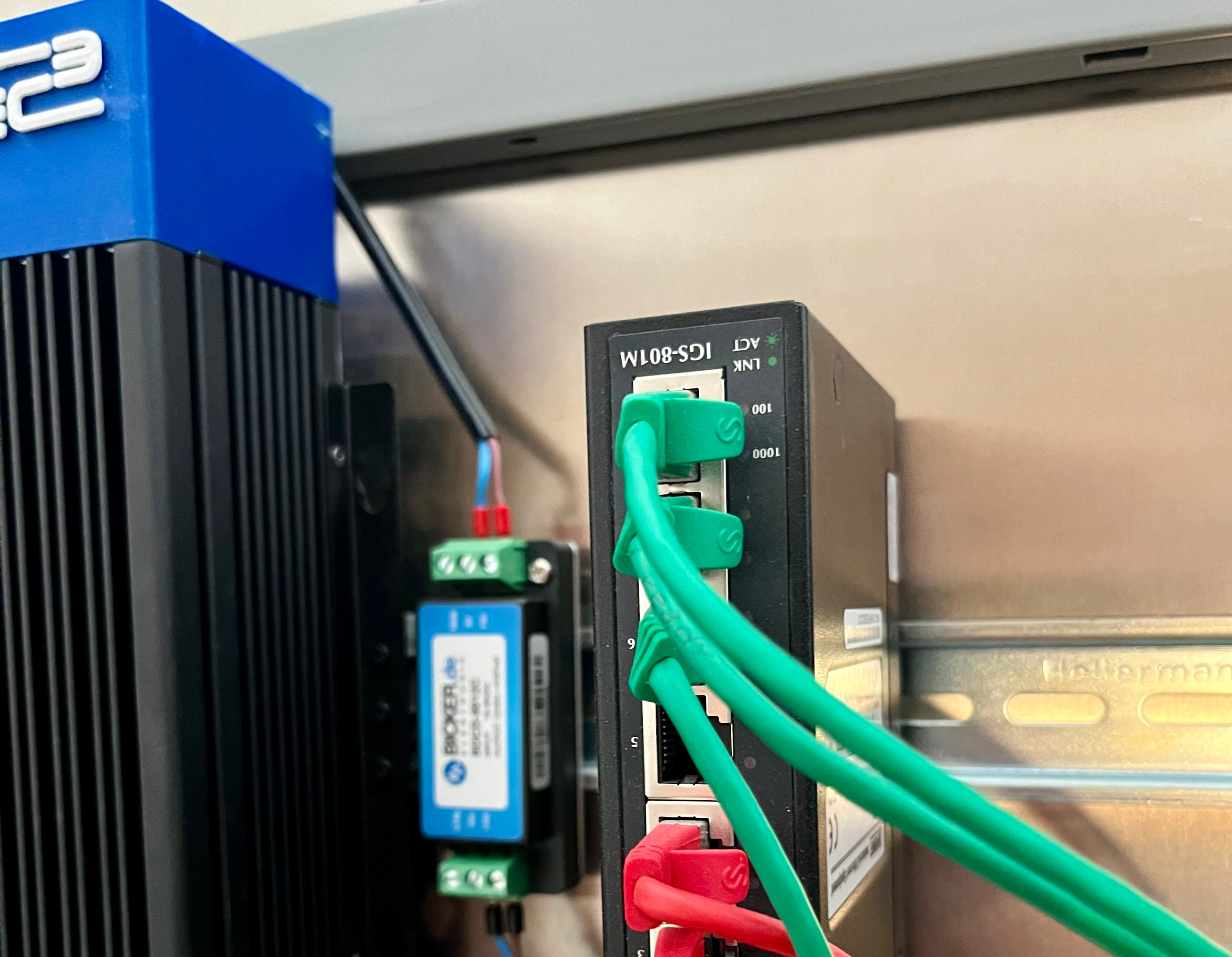
We integrate production facilities into digital systems and processes, ensure secure connections via special firewalls, and integrate IoT edge devices as needed.
New business models through Retrofitting
Machine manufacturers and plant engineering companies typically support several generations of plants worldwide. By connecting machines and plants via specially secured and logged connections, service work can be prepared and carried out in a time-saving and a resource-saving manner. What's more, machine data can be continuously monitored and maintenance work can be carried out specifically based on this data.
Suddenly, it is no longer a disadvantage that different generations of equipment have to be supported. Digital connectivity enables new business models to be introduced. Additional features such as efficiency improvements or updates can be offered as services, generating additional income for machine suppliers.
Brownfields are undergoing modernisation that offers added value to both customers and machine manufacturers.
- Extension of the service life of a system
- Improvement in capacity utilisation and increase in production volume
- Efficiency improvement, e.g. through energy savings
- Predictive maintenance for older systems
- Digitalisation of decades-old systems and their integration into modern IT environments
- Expansion of own business models
01
Debian
02
Docker
03
Kubernetes
04
OAuth
05
OpenVPN
06
ProxMox
07
Python
Brownfield
Secure Communication
Digitalisation
Security by Isolation
Increased Efficiency
New business models
NIS-2
Circular Economy
Firewall
OT Security